Showing posts with label change. Show all posts

Sunday, December 21, 2025

Getting to Acceptance: We're here because we're here

Milo - Image by family permission
Milo enlisted in the Coast Guard in 1942. He did not know if he'd be assigned to Atlantic or Pacific waters (and as a Middle America flatlander, oceans were not second nature) but going with the flow felt right. 

Honorably discharged after serving in Neah Bay off the Washington coast, Milo brought his wife and young son back to their hometown. Going with the flow felt right.

Sunday drives to picnic at lakes or visit extended family always found Milo parking the Hudson and announcing:
Ivan Antonenko, Unsplash

We're here because we're here! Yep, here, too, he went with the flow. 

Standing anywhere but in the midst of grief

Milo's quip is NOT the instinctive response when a loved one dies, but keep reading... 
We've long recited the five stages of grief identified by Dr. Elizabeth Kubler-Ross: 
  1. denial
  2. anger
  3. bargaining
  4. depression
  5. acceptance
Sounding as easy as following a recipe, these stages are actually a personal journey with a very personal duration! In their book Moving Beyond Loss, Russell Friedman and John W. James identify six myths or ineffective responses employed by most grievers:
  1. Don't Feel Bad
  2. Replace the Loss
  3. Grieve Alone
  4. Grief Just Takes Time or Time Heals All Wounds
  5. Be Strong and Be Strong for Others
  6. Keep Busy
When choosing to be anywhere but in the midst of grief, lots of things may get done but transforming the pain of loss isn't usually one of them.

Giving grief a chance to do good things

What if rather than waiting for acceptance to magically or laboriously arrive, I CHOOSE acceptance? What if I say out loud: I'm here because I'm here. Matt Harvey, mindfulness/meditation practioner and author calls this 'embracing your life, even the tricky bits.'  In his essay on acceptance, he shows us how the polar opposites: (a) acting out on strong emotions or (b) suppressing feelings about one's circumstances --- have negative repercussions resulting in much more pain. 

Photo by Alex Jones on Unsplash
We are so inculturated to press, squeeze, and mold life as if it were clay. We worry that if we stop all the pressing either (a) nothing will happen or (b) something bad will happen.

Trying out nonresistance

Choosing to gently acknowledge the loss: "My dear one is no longer here. I miss them terribly. I don't know what's ahead," is a start. Acknowledging is nonresistance...taking my hands off the clay.

Matt counsels that when I stop seeing the grief as a problem to be solved and resisted, and instead just let it be, I will find myself opening in the present moment to a new flow in which things settle into a rightness. I now see choices, opportunities, helps and helpers. I feel more moments of calm instead of fear or pain.

Trying out nonresistance can move from challenging to empowering! I've been trying it out in big and little ways and the results are encouraging.
  1. When I hear neighborhood noise like loud music from an idling car or a dog on a barking jag...I wait in nonresistance---I choose to relax and to trust my choice of nonresistance; eventually the car drives off, the dog settles down or is taken inside. I enjoy some reading and later, sleep well.
  2. When circumstances prevent my being with a loved one on a holiday...I recognize the futility of getting into a lonesome funk and instead wait in nonresistance---I spend a few moments journaling to acknowledge and better understand my feelings as I relax and trust. In awhile, an interesting opportunity or invitation arrives by email or text; I may suddenly get an infusion of creative ideas and feel excited to start on them; I take a walk on a popular trail and enjoy friendly chitchat with others. 

We're here because we're here

Readers may remember my own grief journeys from the death of a parent to the more life-changing death of my spouse. Connecting with compassionate friends and recognizing that life is about adapting to new circumstances has always brought me to a state of harmony. My post on Making It Through the Moment reminds us that 'moments' are all we have and offers more strategies and mindsets to be present to what is.

This is your life and your journey through the mellow times, the joys and sorrows. Trust yourself ... hold a wise friend's hand for awhile ... and try going with the flow. I believe in you!

Thank you for caring and sharing!  

Saturday, March 1, 2025

Re-Balancing After Loss: Carry Two Buckets

(Author's source,
used with permission)
Grandpa Gus was a hard working farmer in Iowa. It was a good life and in wartime, demand was high for eggs, milk, corn and soybean crops. 

Gus, like most grandparents, welcomed the eager participation of visiting grandkids. Chores were assigned because chores are a part of life, but for a townie, the farm was loaded with adventures. From dumping a pail of kitchen scraps in the hog pen, balancing on a milking stool, or avoiding hen pecks while collecting eggs, each task came with a few how-to's and occasionally some patient I-told-you-so's. The lessons were basic and sometimes--profound.

Always Carry Two Buckets

Balancing heavy loads is both art and science. Grandpa Gus routinely carried two buckets loaded with any number of things, and while weights could be substantial, he'd learned that balance was key. 

Isn't it true that one of the most difficult aspects of losing a loved one is the sudden sense of imbalance? Countless habits and routines now feel off-kilter. In her song "My Old Man," Joni Mitchell lamented, "The bed's too big, the frying pan's too wide."  Not simply the realm of spouse/partner death, this lopsided, not-right feeling can surge with the death of a child, the loss of a close friend, or the end of a job. It may seem like everything needs to be figured out again!

Will I Ever Feel Happy?


Our basic quest to feel balanced is normal; like gravity, it anchors almost all choices and activities. Fortunately, I believe life balance can be healed and restored in the metaphor of Grandpa Gus's advice:  always carry two buckets. 

Here's how to get started...Identify your buckets

(Source: Hemerson Coelho on Unsplash)

One bucket is already brimful of feelings. Accept and be gentle with that deeply personal load. Follow the McCartney lyrical adage: Let It Be. 

Your second bucket should hold whatever (used to) makes you smile, feel good, and awaken curiosity. Consider experiences that reduce self absorption. Trust that your first bucket is doing its job of holding emotions and fears. As you fill, empty, and refill this second bucket, I promise you that the first bucket will begin to feel a little bit lighter. 
(Source: Heather McKean on Unsplash)


Consider Lighter Loads

  1. Exercise and Spend time in nature
  2. Volunteer
  3. Find new homes for (gifting/donating) some of the decedent's belongings
  4. Start a Gratitude Journal or Bowl
  5. Meet trusted friends for coffee
  6. Walk through a gallery or museum
  7. Explore spirituality
  8. Take a just-for-fun class
  9. Review your own bucket list and make a plan!
  10. Challenge 'Life' to send you wonderful surprises (It will!)
(Source: Rafael Garcin on Unsplash)

Thank you for caring...and sharing!

Monday, June 19, 2023

Time Management After A Loss: Average Days Are Good!

Author Image
We all strive--or hope and pray for daily equilibrium but in truth, life can be like corn popping --

challenging us to adapt, respond, navigate. We can be quite amazing in how much we juggle, how we steady ourselves with humor, gratitude, love, and dedication. 

Weighty Days

Author Image
Living with grief has enough "weight" attached to it that a person can truly feel in an altered state.  Whether one is coming down from the intensity of caregiving, or coping with sudden changes and stresses in financial security and family matters, ADAPTING, RESPONDING, and NAVIGATING don't come as easily now. At times, we can't see the crack of light under the weight. For most of us, time and a support system enable us to recover--growing stronger and more steady as we regain equilibrium.

I'll take average!

Visiting patients on hospice at a local care facility, my presence as a friendly listener relieves monotony and loneliness. During a recent visit with a 93 year old man I'll call "Dustin," I was both enlightened and delighted by an unintentional pearl of wisdom. The conversation went like this:

"How's your day going, Dustin?"

"Uh, some of it hasn't been easy, but some has been good. I guess it's been average."

"Average? Wow--like finding the average among numbers. I like that, Dustin! Difficult plus good averages out to an average day. Not much wrong with that."

Author Image
While my enthusiasm far surpassed his, Dustin acknowledged me with a slight smile, focusing on drawing oxygen from the nasal cannula.  "Average" has had a bad rap as underachieving, compromising, pathetic. I propose we see average as harmonizing, accepting, stable. When you are on a river, "going with the flow" sums up a current that may have rocks and floating debris, as well as leaping fish and turtles on logs. It averages out well.

Dustin's remark stands out as a tremendous way to cope with the great swings that occur during grieving. If I can AVERAGE the dark or sad moments with the lift I feel at seeing new blooms and a bird at the feeder; the comfort of a friend's compassionate call; the coziness of wearing a loved one's hoodie... 

I can average out the day's moments and feel hope on this journey...one hill, one day at a time.

Thank you for caring...and sharing!


Monday, April 26, 2021

Grief Recovery: Grinding Up the Old Road, Paving the New

Author image

The Growing Through Grief series

A great force at work

There’s a tremendous rumbling outside my home, as beasts of steel move slowly on their low-slung circular tracks. The fiercest of them claws unrelentingly at the roadway, churning up the old macadam. Scooped onto a skyward conveyor, the rough debris are launched into the cavity of a giant white dump truck.

Slim, sunglassed workers in bright yellow safety vests and hard hats live out childhood Tonka Toy dreams, sauntering beside the beasts. A secret bliss beats in their hearts, aglow with the knowledge that no mother waits at home to scold them over the filthy pants they will arrive in. They are the grinders, obliterating all previous roads. Out of sight, the debris-laden lorry will travel to a location in need of its material. For new roads are being constructed, and a foundation of ‘what was,’ suits a new way to come. 

You are the foundation of your new path

People--and roads--are an amalgam of everything known and experienced. And yet, it is crucial to respect the dynamics of change because change--like the grinders’ force--will leave nothing untouched. Daily, there is an expansion of the known and experienced. Layer on top of layer, our lives are paved with rigors and roses, relationships and realizations. What may seem like habit or routine will, if examined under a microscope, be infinitesimally different and new, each day.

Recognizing these facts, I know that the cacophony outside will abate and I will return to my patio, cool drink in hand. I know that a new road will be built outside my door and likewise, inside my heart and mind. It is happening now, with each keystroke.
Author image
Moving forward is what matters most; I spread words left to right on this digital page and as needed, backspace my way to better expression. Left to right, auto-return, left to right again. 

I thank the grinders who are helping me let go of old roads because there is so much more to discover on a new one.

Thankyou for caring and sharing!

Thursday, August 6, 2020

Impermanence (Anicca): Changing how you cope with change

Source
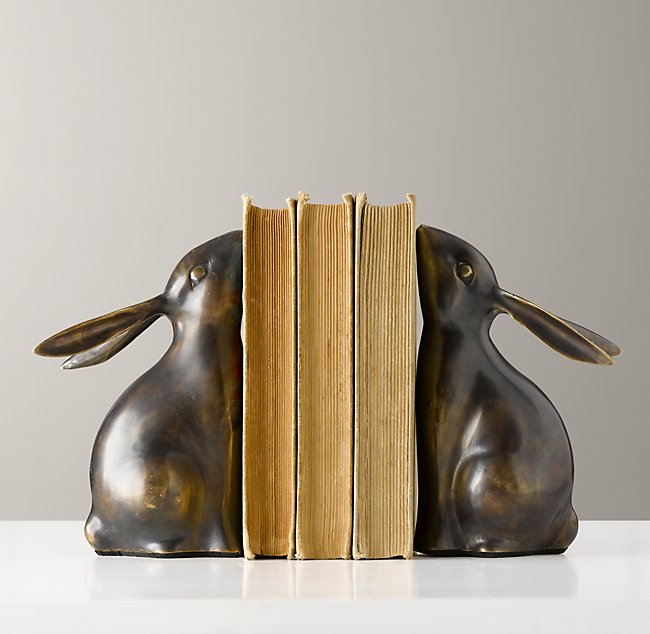
You may not be a bookworm but life is all about 'bookends,' as experiences and life conditions begin, alter and then, end. 

Change. Impermanence. Count on it. 

During the past few months, I have meditated on the concept that nothing stays the same; it has almost morphed into a daily game to see something become useless or end, and something new appear. Sure enough-- not a day goes by without newness.
Source
My path of study was accelerated by reading living this life fully: stories and teachings of Munindra. Anagarika Munindra (1915–2003) was a Bengali Buddhist master, scholar, and compelling teacher of the ancient Vipassana meditation technique. All world philosophies address change and, in Buddhist thought, the absence of permanence is known as anicca - one of the 'three basic facts of existence.'

Humans are born 'hard-wired' to create routines and seek comfort over discomfort. Once effective patterns for survival are met, we expand our search for pleasures, achievements, relationships. The 'expansion' phase is uplifting, often including our deepest relationships, and enduring life satisfactions. But, as Munindra taught: "Sooner or later, everyone has to be separated from all dear ones. For this we have to be ready always. This is the law of nature." 

Living life fully, under any condition

Author image
The reality of Impermanence is not a warning to live cautiously. Instead, I am called to heighten my awareness of each moment. A young Foothill "littleleaf" Palo Verde reminded me to engage every cell toward life. The tree's chlorophyll glows a brilliant green from bark to spine-tipped branches, surging with life, in harmony with arid desert conditions.

In Buddhist thought, there are eight unavoidable worldly conditions known as Astha Loka Dharma. Read this 'bookends' list of expansions and contractions, and tell me if you put checkmarks by each, as I did:
  • praise and blame
  • gain and loss
  • honor and disrepute
  • happiness and misery


Calming the fevers of grief 

Grief can arise with any significant change. There is no easy path to ease the suffering other than eventual acceptance and even-mindedness. Often called equanimity or upekkha in Buddhist teaching, this neutral feeling may seem unnatural in Western culture. The swan dive from joy to misery, from life to death can easily cause a surge of adrenaline, intense emotions and some form of suffering. But the more you can seek out calming practices, the more balance of mind is restored.
  • Be aware: when you feel an emotional surge, instead of flipping out, flip a switch to become aware that you have choices.
  • Focus: take a breath, state a key word or phrase that reminds you to choose even-mindedness. My mantra is Let it be.
  • Time out: it's time for a meditation. 
    • There are apps that you can use to meditate 'discreetly and briefly' at your work (no matter what work you do!) like Headspace or Buddhify. 
    • If you don't have a go-to practice, begin with a guided meditation; it will guide your focus away from the painful emotional surge. Think of it as a lifeline: just hang on. 
    • Guided practice doesn't have to be complicated; I highly recommend a Metta meditation (click on the link) described by the Metta Institute as 'recit[ing] specific words and phrases evoking a "boundless warm-hearted feeling."'  This is called a loving-kindness meditation and truly imparts that embrace. Breathe and speak (or think) the words slowly and sink into the intention; I have used this through tears, stroking my own hand or cheek, or holding a precious memento:
 May I be happy. May I be well. May I be safe. May I be peaceful and at ease.
    Author image
    • Walking in nature is also a soothing practice. Note your sensations and surroundings- like the air current on your skin, a wispy cloud, a wildflower, a bird call, butterfly or busy ant hill.
When life's journey brings you to an ending, don't lose hope. Instead, consider these new approaches to 'the next new thing;' a bright surprise awaits!

Thank you for caring!

Follow these links to read more on these themes:

The 4 Immeasurables for condolence to a Buddhist friend
Compassion and Condolence: finding the words to walk together
Listen! A gift received, a gift given
The physics of intuitive compassion: Albert Einstein had it right!
Responding to tragedy: a million pieces of grief

Monday, September 10, 2018

Remember Who You Are: Condolence Poetry

Loss can trigger self doubt

On a personal level, the people in our daily circles:  spouse, children, parents, friends and co-workers contribute to our dreams and our dramas. This is normal. Interactions at the breakfast table or coffee shop, over the phone or while sharing a commute help us grow roots and branches.

Author image

And when a root or branch is severed by loss, a part of us seems suddenly missing. It hurts and it's confusing; it demands change and pushes us into the unknown. This upset to our equilibrium often triggers self doubt.

Overcoming inertia

While it can be a very good thing to momentarily apply the childhood street-crossing lesson, "STOP and LOOK BOTH WAYS BEFORE CROSSING," isolating yourself with a loss should not become a habit. Sometimes, I find that visiting a fresh inspirational thought: a paragraph or poem or song--can motivate me past self doubt or inertia. Today, I offer readers a poem.

SOON

Soon it will be noon
And what have
You done?
The pool water
is smooth, you
Did not disturb
It.
The grass is high.
You sleep and it
Grows higher.
Would you like
A tall cool drink
On the veranda?
A lime garnish,
Sweat on the glass?
If you do,
Put on your shoes
And remember
Who you are.
~~~

Martin Ringwood, a Michigan poet


Care for ourselves, care for each other. Thank you for caring!