Showing posts with label mindful. Show all posts

Thursday, August 6, 2020

Impermanence (Anicca): Changing how you cope with change

Source
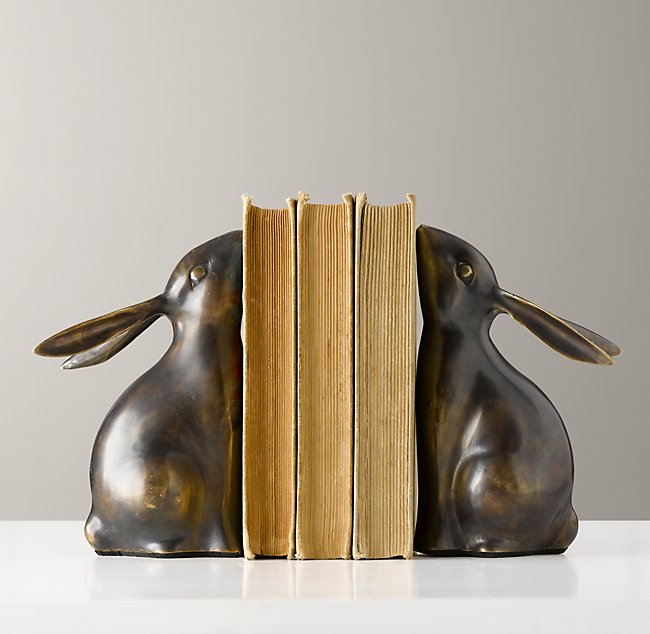
You may not be a bookworm but life is all about 'bookends,' as experiences and life conditions begin, alter and then, end. 

Change. Impermanence. Count on it. 

During the past few months, I have meditated on the concept that nothing stays the same; it has almost morphed into a daily game to see something become useless or end, and something new appear. Sure enough-- not a day goes by without newness.
Source
My path of study was accelerated by reading living this life fully: stories and teachings of Munindra. Anagarika Munindra (1915–2003) was a Bengali Buddhist master, scholar, and compelling teacher of the ancient Vipassana meditation technique. All world philosophies address change and, in Buddhist thought, the absence of permanence is known as anicca - one of the 'three basic facts of existence.'

Humans are born 'hard-wired' to create routines and seek comfort over discomfort. Once effective patterns for survival are met, we expand our search for pleasures, achievements, relationships. The 'expansion' phase is uplifting, often including our deepest relationships, and enduring life satisfactions. But, as Munindra taught: "Sooner or later, everyone has to be separated from all dear ones. For this we have to be ready always. This is the law of nature." 

Living life fully, under any condition

Author image
The reality of Impermanence is not a warning to live cautiously. Instead, I am called to heighten my awareness of each moment. A young Foothill "littleleaf" Palo Verde reminded me to engage every cell toward life. The tree's chlorophyll glows a brilliant green from bark to spine-tipped branches, surging with life, in harmony with arid desert conditions.

In Buddhist thought, there are eight unavoidable worldly conditions known as Astha Loka Dharma. Read this 'bookends' list of expansions and contractions, and tell me if you put checkmarks by each, as I did:
  • praise and blame
  • gain and loss
  • honor and disrepute
  • happiness and misery


Calming the fevers of grief 

Grief can arise with any significant change. There is no easy path to ease the suffering other than eventual acceptance and even-mindedness. Often called equanimity or upekkha in Buddhist teaching, this neutral feeling may seem unnatural in Western culture. The swan dive from joy to misery, from life to death can easily cause a surge of adrenaline, intense emotions and some form of suffering. But the more you can seek out calming practices, the more balance of mind is restored.
  • Be aware: when you feel an emotional surge, instead of flipping out, flip a switch to become aware that you have choices.
  • Focus: take a breath, state a key word or phrase that reminds you to choose even-mindedness. My mantra is Let it be.
  • Time out: it's time for a meditation. 
    • There are apps that you can use to meditate 'discreetly and briefly' at your work (no matter what work you do!) like Headspace or Buddhify. 
    • If you don't have a go-to practice, begin with a guided meditation; it will guide your focus away from the painful emotional surge. Think of it as a lifeline: just hang on. 
    • Guided practice doesn't have to be complicated; I highly recommend a Metta meditation (click on the link) described by the Metta Institute as 'recit[ing] specific words and phrases evoking a "boundless warm-hearted feeling."'  This is called a loving-kindness meditation and truly imparts that embrace. Breathe and speak (or think) the words slowly and sink into the intention; I have used this through tears, stroking my own hand or cheek, or holding a precious memento:
 May I be happy. May I be well. May I be safe. May I be peaceful and at ease.
    Author image
    • Walking in nature is also a soothing practice. Note your sensations and surroundings- like the air current on your skin, a wispy cloud, a wildflower, a bird call, butterfly or busy ant hill.
When life's journey brings you to an ending, don't lose hope. Instead, consider these new approaches to 'the next new thing;' a bright surprise awaits!

Thank you for caring!

Follow these links to read more on these themes:

The 4 Immeasurables for condolence to a Buddhist friend
Compassion and Condolence: finding the words to walk together
Listen! A gift received, a gift given
The physics of intuitive compassion: Albert Einstein had it right!
Responding to tragedy: a million pieces of grief

Monday, March 23, 2020

Coping with Covid-19 Stress: Finding Pleasure and Peace in Slow

Jackrabbit on trail
Author image

While hiking under a gently warming Arizona sun last summer, I was on the verge of a panic attack. I was used to avoiding the occasional free ranging cattle and their plops. I was also used to scanning the surroundings for snakes. But, discovering that a resting, coiled snake may resemble a dry manure mound, was startling.

My usual panoply of sensory pleasures--wide sky, bird calls and blooms--with the addition of now-suspicious plops, became a Code Red cacophony. At my usual swift stride, I called back to my hiking buddy, “I’m feeling overwhelmed by everything I need to watch out for!” His simple reply changed my life: Why don’t you slow down?

Crisis Intervention

Slow down. This message permeates health and wellness media with calls to be mindful, focused, conscious, present, aware, tuned in, receptive, centered, grounded. Now, Covid-19 prevention is mandating us to slow down, too. During a crisis, the sense of vulnerability heightens and our tolerance for mental chaos may fluctuate. This is highly characteristic of the grief journey. Individual thresholds for ‘chaos’ vary, like a strong radio signal that turns to static. If you’re feeling mental static, it’s time to turn off the “breaking news” and tune in to yourself. Slow down.

Cloud gazing
Author image
I utilize a variety of methods to get grounded. Is the setting day or night, sunny or cloudy, private or public? Develop some methods that empower you with choice and comfort. Simple “meditation” can be sitting with eyes closed and focusing on breath. Get on the floor or a yoga mat and stretch, roll, breathe. I also highly recommend cloud gazing (best done with formations, not full-sky gray.) Relax and watch them drift, change shape. Brief, light tapping on oneself (also known as the Emotional Freedom Technique,) may be calming and done anywhere, with subtlety. Can you step outside for a walk or play a soothing tune? If traveling, find the airport terminal art gallery before takeoff or, read a short, enjoyable text.

Blue Skipper on leaf
Photo used with permission
Jim Hunter, Fairbanks, AK

Savor the Slow

As a writer, I value words for many reasons; language is amazing! Does my sentence need a dandelion or dahlia? Most of us enjoy reading, but I have discovered the calming pleasure of reading word... by...word. Taking that brief text, prayer, proverb or affirmation, I read one word at a time. Try this: Savor that word! Let its shape and sound and nuance roll around in your mind like a peppermint on the tongue. Then, read the next word, and so on. I am usually a happy, limp noodle after only one sentence!

It is important to remember that slowing down is not just for Code Red situations. In The Power of Now, Eckhart Tolle advises that a steady practice of being mindful during all daily activities will strengthen mindfulness during difficult moments. I hope you, too, can discover the pleasure and peace of ‘slow.’

Read other posts about mindfulness: 

Thank you for caring!