Showing posts with label family. Show all posts

Monday, September 23, 2024

Condolence for Sibling Loss

Author image
The grieving experience of losing a brother or sister has some universal qualities but will also be highly individualized: people--and their relationships--are like that! Sibling losses may happen at any age, affecting all members of a family; see links to other posts, below. 

We have a particular sense of tragedy linked to the age of the person; But if you speak to a mature adult who mourns a sibling, they may express deep sorrow. Over the years, I have asked several people if they would be willing to write about their loss for this blog but always, the loss feels too fresh or complex for composition.  I simply encourage them to honor their grief journey. 

Finding words instead of walking on eggshells

Feeling understood--or at least, met with compassion, is such a gift. The Condolence Coach reminds readers that you can't fix the loss or remove its pain. Here are options to turn powerlessness into a power with the gifts of caring, listening, and supporting our shared human experience.

When you do not know the sibling

Unless you are an only child, you know what growing up with siblings is about... your own version of a family and its dynamics is individual but still, common ground exists. When you are told of the death, try to ask a few simple questions:
What is your brother/sister's name? Where do they live? Had you seen him/her in recent years? Do they have children or grandchildren? Any of these questions give you tools to personalize your condolence note. 

Sample note #1:

Dear _______,

I want to again express my condolence for the loss of your brother. Yes, we're 'of the age' for such things, but that cannot soothe the impact. Your brother 'shadowed' your own growing up, and knew you in ways most others don't. I have no doubt that you have been a beloved brother. How wonderful that _[share a wonderful fact, such as a recent visit, if any]_!

I like to remember (and have reminded myself of this when faced with family loss) that 'family' is a term which has no expiration date; bodies arrive and depart, but the relationship forever resides in the heart. I hope that thought can also be of comfort to you and [name other family or spouse of note's recipient, if any]_. 

Warmly,

Sample note #2:

 Dear______,

I was sorry to learn of your brother's recent death at his home in [location]. So many of us here feel that challenge of family distances during difficult times.  Does he leave children, a spouse? 

I have found such comfort in sharing memories at a time like this, and can only imagine the heartwarming conversations you've been having with those who knew and loved your brother. I would like to hear some of your memories.

When you know the sibling

It is such a 'plus' to have been acquainted with the decedent you are writing about. Have you had opportunities to see the siblings together? Knowing the sibling, or having heard many stories about their relationship to your friend, supports you in sharing kind memories or warm reflections. If there were difficulties, DO NOT assume you are being a good friend by bringing them up! Your note should never include disparaging, judging or painful comments.

Sample note:

Dear ______,

Thank you so much for letting me know of your sister [sibling name]'s passing. After losing your brother, Mike, last year, I can't imagine how battered you must be feeling. You often spoke about growing up  with [sibling name], appreciating that you were close in age. I loved your stories about [_____________].

Will her children be hosting a Celebration of Life? If you'll be traveling, I can take care of Puff, and watch the house. For now, be good to yourself: bathe your tender heart in sunrises and sunsets...

Sibling losses may happen at any age

Consider these variables:
Author image
All members of a family are affected by sibling loss. 
Thank you for caring...and sharing!


Tuesday, November 28, 2017

5 Lessons Little Kids Teach Us About Loss: Guest post by Alexis Marie Chute


Once again, Grief Digest Magazine, produced by Centering Corporation has inspired me with an excellent article. 

What are your views and concerns about how children view death? 


  • Do you feel youngsters should be protected from sad events? 
  • Do you hire a babysitter when you have to attend a funeral or memorial service?
  • Do you tell the kids you "have somewhere to go" instead of explaining the occasion? 
That's how it went in my childhood; my siblings and I did not visit a grandmother's deathbed or attend her funeral; when an uncle died in a farm tractor accident, my dad travelled alone to attend his brother's services and comfort surviving family. 

These are very common responses, but Alexis Marie Chute tells a different story. When her newborn survived only one day, her whole family faced the loss. Here is her story...


Alexis Marie Chute

 5 Lessons Little Kids Teach Us About Loss

by Alexis Marie Chute

I think it’s safe to say that our society does not prepare us for the death of a loved one, either in how to experience it when it is happening or in how to grieve afterward. We are taught to shelter the living from death as if it is an unfortunate reality, better ignored than embraced. Grieving individuals, and those that support them, often struggle for a vocabulary to talk about the loss and the resulting feelings. Instead we have a vernacular ripe with cliche that leaves mourners wanting and isolated, instead of comforted and encouraged.

I experienced all of this when I lost my son, Zachary, from a cardiac tumor at birth in 2010. He was minutes old. He died in my arms. That day was a stake in the road for me; I ceased to be my old naive self and began – what is called in grief literature – my “new normal.” As I look back on myself, I recognize that much of the trauma of Zachary’s death came from my childlike desire that we all will live forever and that everything will be okay. My parents did not talk to me about loss when I was little. I wish they had.

My husband, Aaron, and I have been honest with our living children about Zachary, what happened to him, how it affected us, and how we still miss him today. That discussion has opened the door for my children to think about death. Some of their responses have taught me valuable lessons.

1. Talk about the dead.

This sounds like something out of the Sixth Sense movie or the perfect set-up for being labeled the weirdo at the party. It shouldn’t be. Children are not predisposed (unless we teach them) to the negative societal taboos around loss. My seven and four-year-old kids bring up Zachary all the time. If someone dies, they mention Zach. If I am asked how many kids I have and I say, “Three,” I am immediately corrected. “No, Mom. You have four kids!” they say proudly. Sometimes I worry how others will respond to this behavior from my children, but then I give my head a shake. Talking about those we love, even if they have passed, should be the most normal thing in the world.

2. Accept death as a natural and beautiful part of life.

We have a cultural obsession with youth and beauty. This is one area, among many, where the cult of celebrity sets us up for heartache. We do not have public and prolific guidance to help us accept death as inseparable from life. I believe life and death are yin-yang, two equal parts of one complete whole. In contrast, our society has erected opposing notions of life and death as one being good and the other bad.

Children, however, when spoken to about death as a part of life, do not fear it as a scary monster to avoid, but integrate it into the fabric of their understanding. There are many natural parallels that children more innately connect with on this topic. The seasons are one example. Leaves fall from the trees each autumn and we have winter. Then new life grows again in the spring. A seed that is buried in the ground, just when we’ve nearly forgotten about it, sprouts and blossoms into a flower. In a short span of time a great grandparent passes and a new sibling birthed. This is all natural, cyclical, and connected.

3. Think about death and strive for personal understanding.

My older children used to go to a day-home while I worked. One day the woman who ran the home took a step closer to me than normal and in a hushed voice said, “I just wanted you to know, your kids were playing make-believe today and they said the baby-doll died. I made sure to tell them that they shouldn’t play like that.” Instead of being concerned, I was proud that my kids were working out their own personal understanding of our experience and what death means to them! They were doing that in the only way they knew how - through play. When I talked to them about it, I affirmed their actions and encouraged them to make-believe however they wanted. They were not distracting themselves or repressing their feelings on loss, like so many adults do, only to rack up steep therapy bills just to re-open their hearts in this expressive way.

4. Loss is a family matter, not only a solo experience.

The bonds between family are not severed because of loss. That is what my children have taught me. When my kids talk about Zachary, he “is” their brother, not past tense. We talk about how Zach lives on in our hearts. If we are discussing loneliness, my kids pipe up and say, “You are never alone because Zachary is right here,” as they point to their chests. I know they do process the loss in an individual way, we all do, but in mourning and celebrating Zach’s life, it is a family matter.

My daughter, Hannah, my seven-year-old, will draw a portrait of our family and, without prompting, include Zach in the picture. That is her solo action, but she immediately shows Aaron and me the drawing, and then hangs it from the fridge with magnets. As a family, on the anniversary of Zach’s birth, and death, we take the day off from work and school and bake a cake, go swimming, plant a tree, and just generally cuddle-up and spend quality time together. I believe because of this, the kids do not feel they carry their grief, or the weight of death, all on their own. It is a shared experience and therefore shared support and love.

5. Speaking of love… It never dies.

My kids often say, “I love my whole family! I love Mommy and Daddy, and Hannah, and Eden, and Luca, AND Zachary!” They talk about loving their unseen brother. They talk about missing him and wishing he was alive and with us. In these moments, I take a deep breath, pause from busyness, and feel my own love for Zachary and the throb of ache in missing him and the life I had hoped we would share together. Yes, my child died and that is my personal tragedy, but the love I have for him can never be taken from me. Though society uses phrases like “move on,” I choose to take the lead from my kids. Zachary is a part of us and we love him – present tense, and that is okay.
Expecting Sunshine, A Memoir by Alexis Marie Chute
💔💕💗  

In her memoir Expecting Sunshine, A Journey of Grief, Healing, and Pregnancy After Loss, Alexis shared her journey--from pregnancy and the discovery of Zachary's in-utero condition, to the family's decision to always love him as son and brother: present tense!
Click here to learn more about the book


 ABOUT THE AUTHOR:
Alexis Marie Chute is the author of the award-winning memoir Expecting Sunshine: A Journey of Grief, Healing and Pregnancy After Loss, available on Amazon and wherever books are sold. Alexis Marie is a writer, artist, filmmaker, public speaker, and bereavement expert. Learn more about her book and documentary, Expecting Sunshine: The Truth About Pregnancy After Loss, at www.ExpectingSunshine.com. She is a healthy-grief advocate educating others on how to heal in creative and authentic ways. You can also connect with Alexis Marie Chute on Facebook, LinkedIn Twitter, Instagram, Pinterest, Tumblr, and YouTube.

RESOURCES:
 Visit Alexis' bereavement blog:  www.WantedChosenPlanned.com

Condolence Coach Photo
The Condolence Coach did a 5-part series on how to understand and respond to a family facing miscarriage, stillbirth, and infant death:
  1. Angels Above Baby Gowns: Soothing a Terrible Loss
  2. Angels Above Baby Gowns: Someday I'll Meet My Brothers
  3. Angels Above Baby Gowns: Delivery at a Birthing Center
  4. Angels Above Baby Gowns: A Time to Tear and a Time to Mend
  5. Angels Above Baby Gowns: Heartbeats and Lightening Bolts
And remember that the grieving family includes grandparents:


"Punk Bird" by Suzy St.John
A widely celebrated project for kids is the creation of a memory box. Here's how to introduce the idea:  Grieving Children and the Memory Box Condolence Gift. 

In this season of giving thanks, I say to all readers:

Thank you for caring!

Tuesday, April 4, 2017

Don't Be Shocked: It's Okay to Not Attend the Funeral

There are many reasons that people do not attend a funeral.

Let's run through some reasons, all of which, I have professionally witnessed:
  • Away on vacation
  • About to take vacation, which is nonrefundable
  • Moving (this happened to me!)
  • Bad weather
  • Lack of travel means or funds
  • Poor health
  • Too many deaths in close succession
  • Not speaking to surviving family members
  • Myriad fractured-relationship issues
The Condolence Coach says of any and all reasons:  IT'S OKAY. A funeral should be a magnet for care and respect, NOT an arena to revisit wounds or iron out strife.
Author photo

How do you say "I'm not coming"?

I'd advise diplomacy. You do not need to release a rant, or whine with guilt.

If you have positive feelings but conflicting circumstances: 
  • Express your sincere sadness over the death.
  • Express your regret at being unable to be at the funeral, but suggest a visit at a later date.
  • Under the crush of details and sadness, the responsible person may agree that "later" sounds peaceful. In truth, "later" visits and condolence notes fill a void.
  • In the interim, spend some time reflecting on the deceased:  do you have unique photos, keepsakes, or memories to share?
  • Set a reminder, if necessary, to make that future visit happen.
If you have positive feelings but prohibitive circumstances:
  • Again, your sincere sadness over the death should be expressed, as well as your regret to not attend the funeral.
  • Since "later" may not be an option, you must do more than send flowers or sign your name to a card. While those emotions are peaking, begin jotting down memories, browse through a photo album and pull one or two images. Think about the deceased: what made them unique? Did they have an influence on you? How would you characterize their legacy? Your condolence note may turn into a long-winded letter but it will be special!
  • If you are physically unable to write, dictate to someone who can, or consider a recording. Yes, a phone call is an option but as my readers know, it lacks a permanence only possible with hold-in-your-hand notes and pictures.
If you have negative feelings: 
  • You--and they--don't belong at the funeral. It doesn't matter if your distaste is for the deceased or survivors--please stay away.
  • I am not judging your feelings; no doubt you have suffered angst and/or anger. The fractured relationship is probably not a secret, and I can assure you that the deceased's family may have had a whispered, anxious conversation about whether you would show up.
  • It happens: funeral home staff are asked to watch for, and bar, an unwanted visitor; sometimes an arrangement is made for a private viewing by the "difficult" family member, while family leaves for dinner.
  • Please remember that a funeral (we're using that term to cover all associated pre-and-post gatherings) is a tradition designed to render comfort. Accept your limitation in this regard.
Author photo

Beyond negative feelings: 

Now that you've read the 'DON'TS' surrounding negative feelings and funerals, here is the 'DO': 
  • Listen to your heart. If you notice a caring thought or endearing memory pushing through your negative feelings, jot it down. When you feel able, visit that thought or memory again and go a little deeper. jot down a little more. 
  • Maybe you have a snapshot somewhere, showing a good time once shared; put it with your notes.
  • It's not time--it may never be time, for you to write a condolence note to someone else, but as an act of compassion to yourself, you could be the recipient of the condolence.
  • You can also write a note to the deceased! I explain the why and how in my post, Dear Frank, I'm Sorry You Died: Writing to the deceased, . This may be an excellent tool for you to express your feelings, the highs and lows. This is not a letter that will ever be read, but it can provide important catharsis.

Boundaries and Freedom

American psychologist and co-founder of the Humanistic Psychology movement, Dr. Clark Moustakas, noted that we gain freedom through exercising boundaries. He pioneered self-acceptance over self-condemnation, and wrote: 
"Accept everything about yourself--and I mean everything. You are you and that is the beginning and the end. No apologies and no regrets."
Thank you for caring!

Tuesday, August 9, 2016

6 Tips for Writing Condolence to a Relative

I have a strong suspicion that many readers have not considered writing a condolence note to a relative. Do you recognize these 6 excuses?
  1. We see each other a lot.
  2. I just saw them at the service.
  3. We call, text, or Facebook each other.
  4. Writing seems so formal.
  5. I'd rather give a hug than a letter.
  6. They'll find out I'm not a writer.

When Grandma died in the airport

I do write condolences to relatives, and readers of my book remember the story of Grandma's death in an airport restroom. Awful, right? Now imagine how frightened, panicked, and devastated her family felt. Grandpop and my father waited in the terminal while my mother accompanied her mother to the ladies room. "I don't feel well. I need to sit down," moaned Grandma as she sunk to the floor. Being a practical woman, she unpinned her 'corset money' from an undergarment, which she earned from bead and crochet crafts, and handed it to her daughter. My mother felt so powerless to render comfort other than her presence. And by the time an EMT team arrived, Grandma had succumbed to the heart attack.

Yes, I wrote a note to my mother! It's in the book. For losses spanning human, pet, job and other difficult life circumstance, I  have written condolences to my father, siblings, sisters-and-mother-in-law, aunts, uncles and cousins. 

Relatives are people, too

Author image
The reasons for writing a condolence are universal. You are striving to lend support and a few moments of comfort. You have many advantages in being a relative:  you likely have one or several special memories--including photos, to share; in fact, your relationship and likely interactions with the deceased are unique, increasing the likelihood of a unique memory! Did your uncle recognize an interest or talent and give you a nurturing gift? Did you pet-sit for your sister's cat and discover something special in its golden-eyed gaze? Did your brother-in-law help you move after a divorce? These memories can be shared, thanks and appreciation can be expressed. Did you watch your aging mother-in-law make--and lose--friend after friend?

The comfort that your note delivers does not--should not--be wrapped in complex, philosophical or religious explanations. You are 'off the hook' to take away pain, map out the future, or give wise advice. Just be sincere. Now, more than ever, real handwritten, hold-in-the-hand condolences are treasures. They are re-read during quiet and lonely times; they are shared with others; they provide what the digital age cannot.

6 Tips for writing to a relative

Let me caution you:  if you think that buying a lovely card and writing "so sorry for your loss, she will be missed" is adequate, please click on the links peppered throughout this post for a quick, comprehensive review of condolence writing. You don't need to use all 6 tips at once. Think about the deceased and the recipient, then listen to your heart.
  1. Acknowledge the loss and express sympathy:  "I am so sorry this day has come; Terry's death leaves an empty space."
  2. Acknowledge the relationship:  "Your sister, Mary, knew she could count on you." 
  3. Share a classic, well known memory:  "Bailey's greeting at the door always made me smile." 
  4. Share a personal/unique memory:  "Uncle Rick saw my creative side and gave me a set of pastel crayons." (Never break a confidence, or share cruel or embarrassing memories.) 
  5. Offer encouragement and/or help:  "I know you're facing a big job to ready the house for sale, so remember: my truck and my time are at your service." 
  6. Express gratitude for the recipient or deceased:  "You were so supportive to Elsa, especially when she couldn't feed herself; it taught me a lot about compassion."

Which relative should I write to?

Who is the next-of-kin? Who do you have a connection to? If you are closer to your cousin than to your aunt who just lost her husband, it's okay to write to your cousin; he or she will probably share the note.

Should I write to more than one relative?

Author image
You certainly can, but don't feel pressured to blow through a 12-pack of note cards. While considering which relative to write to, your heart will put checkmarks by those you want to express sympathy to. Attending a visitation or service allows you to touch base with many people, which can 'winnow' the roster of notes. Review your memories and your emotional, heartfelt responses; if you feel the impulse, writing two or three simple and caring notes is lovely.

When should I write?

We write condolence notes even when we attend services. If you can be present for gatherings, consider delaying your note until after; you will return to your desk ready to share feelings and observations with enriched awareness of:
  • the scope of a family and community's shared affection
  • life details you did not know such as quiet achievements and talents, branch of military service, significant dates
  • qualities of your note's recipient
Thank you for caring!

Wednesday, September 23, 2015

The Long Goodbye, Part 1: Alive Though Different: Anticipatory Grief During Alzheimer's Disease

This is the first in a series of posts about what it is like to live with Alzheimer's Disease, what comes after the death, and how to compassionately support a family during this journey.

Author Image

Those of us on the "outside" of a family facing Alzheimer's Disease, assume they are experiencing the 'evaporation' of a dear person. Yes, there are changes to a familiar personality, but in this post, we will learn a critical fact:

"There's is a person in there."

Responding to the common labelling of dementia as 'the long goodbye', Richard Taylor, Ph.D. mused:  "When you hear the diagnosis, you feel like you are dying; as people hear of your diagnosis, they start saying 'goodbye'. Instead, please say 'hello!' 

At the age of 58, Dr. Taylor was diagnosed with probable Alzheimer's type dementia. A founding member of Dementia Alliance International, Dr. Taylor served for more than a decade as "an advocate and global voice for people with dementia," until his cancer death on July 25, 2015.

I encourage readers to see any of his films or read his insight-filled memoir, Alzheimer's From the Inside Out.  After viewing Be With Me Today, I threw several assumptions (and a first draft of this post) out the window. Dr. Taylor's key points are:
  •  "I am a whole person; I may be different but I am not half empty."
    • Our assumption that someone is "a shell" of who they once were is erroneous. 
    • "We flourish in a different culture. Cognitive decline is real but there can be growth and learning, too!"
  • "While losing the ability to convey thoughts, sometimes behavior becomes the voice."
    • We assume that behavior changes must be 'handled,' and that lessening inhibitions are a problem.
    • Instead, these are doorways for new experiences if families and caregivers "partner" with the person--asking and offering the chance to dabble in singing or other self-expression. 
  • "We need enablers, not disablers:  
    • Allow us to be who we are.
    • Allow us to have dignity and a sense of purpose.
    • Look for ways to be supportive instead of punitive or controlling."

Is the family's journey all about 'anticipatory grief'?

All of the "we used to do's" and "she was so good at's" press on hearts because it's not just about the person with the disease:  your life has irrevocably changed, too. Changing roles brought on by changing abilities, affect running the household, expressing intimacy, and socializing.

The Alzheimer's Association provides myriad resources, including peer-to-peer support groups and online message boards, to help families learn and cope with the disease. Comments on this journey, shared on alzconnected.org message boards, include:

The Detour of an Alzheimer's Diagnosis

"I woke up feeling like I can not do it anymore. I pray all the time that God will give me the strength to keep going."

"No one really understands. You say 'cancer' and everyone bows their head with compassion. You say heart attack, stroke, or any other bloody thing and you get uninhibited support. But you say dementia and most of the time it's the big blank stare...It's a lonely disease filled with heartbreak that can stretch out over years and years, with no clear pattern and no predictability."

"We should be enjoying our retirement years, but this detour wasn't in our plans." 

A Compassionate Response

A compassionate response to the Long Goodbye begins as a listener. In various settings, I have found myself listening to a caregiver pour out weariness and frustration. Give someone five minutes of your time; let them vent. It helps.

Sometimes, just offering a little unrelated humor loosens tension like a deep breath:
a line from a sitcom, a cartoon from the newspaper, or one of those 'kids say the darndest things' viral emails or YouTube videos.


If you are able to provide some support during the caregiving phase:  a respite visit, chores, a nourishing treat--it helps.

Suggestions for a Respite Visit

As I continue to harvest insights from Dr. Taylor's memoir, I'd like to share a few of his suggestions for supporting the person with the disease, during a visit:

SING and HUM.  

  • Anything from children's songs to hymns to well-known commercial jingles (especially those from the early years of the person (long term memory). 
  • Sing out loud--loudly! "It's much more satisfying if done with all of your body instead of just between your ears."
  • Richard says, "singing helps me feel that I am feeling okay and, in fact, good."
  • "Humming makes your lips, mouth, and throat feel good."

LISTEN TO AUDIO CHILDREN'S BOOKS.

  • During Richard's decline, he spent a great deal of time with his young grandchildren, and one of their favorite shared activities was reading books. As Richard's reading skills declined toward those of his five year old granddaughter, they shared some of the task.
  • Listening to children's audio books is quite entertaining. With different character voices, music and sound effects, it is very entertaining. If possible, have the print book (loaded with illustrations, of course) to share, as you listen.

Keep in mind that individual preferences do exist--and change. And remember, this person you are visiting, IS A PERSON. Here are more suggestions from Dr. Taylor:

  • Make eye contact.
  • Use the person's name, often.
  • Speak slowly but, unless you have been told he or she has hearing loss, do not raise your voice.
  • Accentuate the positive and spend time exploring their recollections (of long term memories.)
  • Listen.
  • Pause from time to time and ask:  "How are you? Shall we do this some more?"
  • Acknowledge responses and participation by saying 'thank you.' 
  • Your expressions speak volumes; yes, this disease is confusing from the inside and the outside:  Smile!

The Long Goodbye, Part 2: The Empty Sigh After Alzheimer's Disease explores the stages of grief after a dementia related death. I will present some insights from therapists and researchers, and guidance for your continued compassionate contact.

Thank you for caring!


Tuesday, December 16, 2014

Silent Night, Holy Night: Sacred Dying is another reason to write condolence

My end-of-life work has expanded this year to vigiling at deathbeds.

As a volunteer with a local hospital's No One Dies Alone (NODA) program, I am asked to sit with a dying patient for a few hours. When a family accepts the offer of NODA services, round-the-clock (or specific windows of respite) coverage are scheduled.

Silent Night, Holy Night

During my orientation with Chaplain Diane, I was asked to indicate which 4-hour shifts (in a 24/7 grid) I could serve as a 'compassionate companion.' At first glance, the choices were baffling; my mind quickly shuttled through my commitments and habits and I found myself putting check marks on 4 a.m. to 8 a.m., two days per week. That impulse has been wonderfully rewarding. It is nighttime when most families take a break, go home to rest, give pets attention, and squeeze in other life responsibilities.

Author image

I am called out weekly into what is always a Silent Night, a Holy Night. There are very few vehicles on the roads and it is pure pleasure to descend the ramp to the rebuilt freeway and take my pick of 5 lanes' white concrete streaking by. I say a prayer that my presence be helpful.

It's almost 4 a.m. when I log in at the nurses station. The 4th floor is bright but hushed and I enter the patient room, knowing only his or her name, age, and status for 'universal precautions' (i.e. if communicable infection.) "Hello, Stanley," I say as I approach the bed, "my name is Deborah. I'm going to spend some time with you tonight."

"Doesn't Deborah think about anything else besides death?" Sure, I do. But like anyone else with a passion, responding to a 'calling' delivers unparalleled satisfaction. 

Are you familiar with the dynamic of synchronicity? 

Carl Jung, a 20th century pioneering psychoanalyst, believed in significant connections between thought and occurrence. What we focus on may manifest itself in coincidences that may provide insight, aid and opportunity. I have often expressed that just as we consider birth a momentous occasion, death [and dying] should be honored for its mystery and significance.

Thus I synchronistically found myself in the Dewey Decimal stacks of 291.38. 

Allow me to detour for a moment and explain that the Call Number 291 is Comparative Religions. I do not believe books on dying should be bogged down by religious proscription, shelved A to Z between Atheism and Zoroastrianism. I certainly wouldn't want to find books on dying in Call Number 616, Diseases. May I respectfully suggest a reclassification to 269, Spiritual Renewal or the crux Call Number 218, Humankind. Can I get a Comment from a librarian, please?

I felt at home when my eyes laid on the spine of 291.38A Sacred Dying, Creating rituals for embracing the end of life. This is Megory Anderson's attempt to provide both "testimonial and handbook" on how to "reclaim death and dying for the person going through it." She acknowledges that the hospice movement has returned the family to the farewell, but cautions that solicitous concerns about grieving divert loving attention away from the person actively dying.

A theologian, author, educator and liturgist, Dr. Megory Anderson is the founder and executive director of the Sacred Dying Foundation in San Francisco.


Readers will be inspired by Dr. Anderson's skill and experience in creating meaningful rituals. With her insights and passion for "honoring the final hours of a person's life," she has created a set of tools which family members and caregivers can employ, mindfully, to enhance the transition from physical life. The Sacred Dying Foundation also offers Vigil Training for individuals and institutions.

Sitting Vigil

Sitting vigil is the term for companioning a dying person. It may be a time with or without an exchange of words. In many cases, my patients are in advanced stages of dying, unconscious, in a pain-managed dream state, generally unresponsive. Rhonda Macchello, MD, adjunct faculty medical advisor to the Sacred Dying Foundation notes:
 "Fundamentally, dying is a spiritual process and not a biological one."
That tips over a lot of our assumptions. Whether a dying person is conscious or comatose, comfort measures for the body are secondary. However, it is crucial to create a structured focus on the person dying, and it is imperative to assume full  function of hearing:  auditory input--whether discordant or soothing, has an impact. When caregivers, family and friends surround the deathbed with their veil of sorrow, a good transition is impeded.

Take it outside

It's true:  with few exceptions, the sense of hearing remains to the end of life. Conversation and squabbles among bystanders about medical care and decisions, expenses, funeral, wills, property, estates, fears, resentments, tiredness, inconvenience--and even sorrowful crying--are burdens to the spirit of the dying person. Step out of the room and out of 'earshot'.

Gifts for the dying

Death is sacred because of its mysteries and profound emotion. Stay focused on that. Enhance the reverence with soothing touch, peaceful music, pleasing scents, soft glowing light...
Forgiveness, gratitude, love...

"Rituals transform one state of being into another."

 Dr. Anderson uses the examples of blowing out candles on a birthday cake and rites of passage such as a first driver's license to describe the ritual triggers for thought, insight, and transformation. She acknowledges that religious rituals and symbols can be a part of vigiling if they are meaningful to the dying person, but suggests that personalized rituals will often address deeper issues. A special memento, a favorite toy, a religious article or often, the creative repurposing of an everyday item can be used to exercise the psyche in resolving concerns. The desired outcome is always a readiness to let go of the body, to 'leave'.

I loved her story of taking a sheet from a hospital's linens shelf, and tying knots to represent the concerns of a dying person. As each topic is discussed and 'let go', a knot is untied. Finally, the sheet is liberated to become a huge sail, its four corners held by family members who joyfully loft it overhead. And though this ritual is for the dying, the symbolism of freeing their loved one's soul is deeply comforting to family.

The Music of the Night

On a Silent Night, Holy Night (a vigil), one of the first things I do is turn off the television. Though there is a channel with calm music programming set to nature scenes, the digital broadcast is unreliable. Our NODA program equips a Comfort Cart in each room with a CD player and case of discs. My current favorites are Angel Symphony, Memory Road, and Walk in the Woods.

The melodies take me to deep ponds of gratitude for the person's life:  their humanity, kindness, and courage. I assume the best. I consider them teachers. I forgive their shadows and encourage the true glory of their soul to burst forth from a tired shell.

On a Silent Night, Holy Night- everything is possible.


Sacred dying is another reason to write condolence because life is a spectacular thing. It is note-worthy.

Thank you for caring!

Tuesday, September 23, 2014

Missing Children: Sharing Hope While Sharing a Nightmare

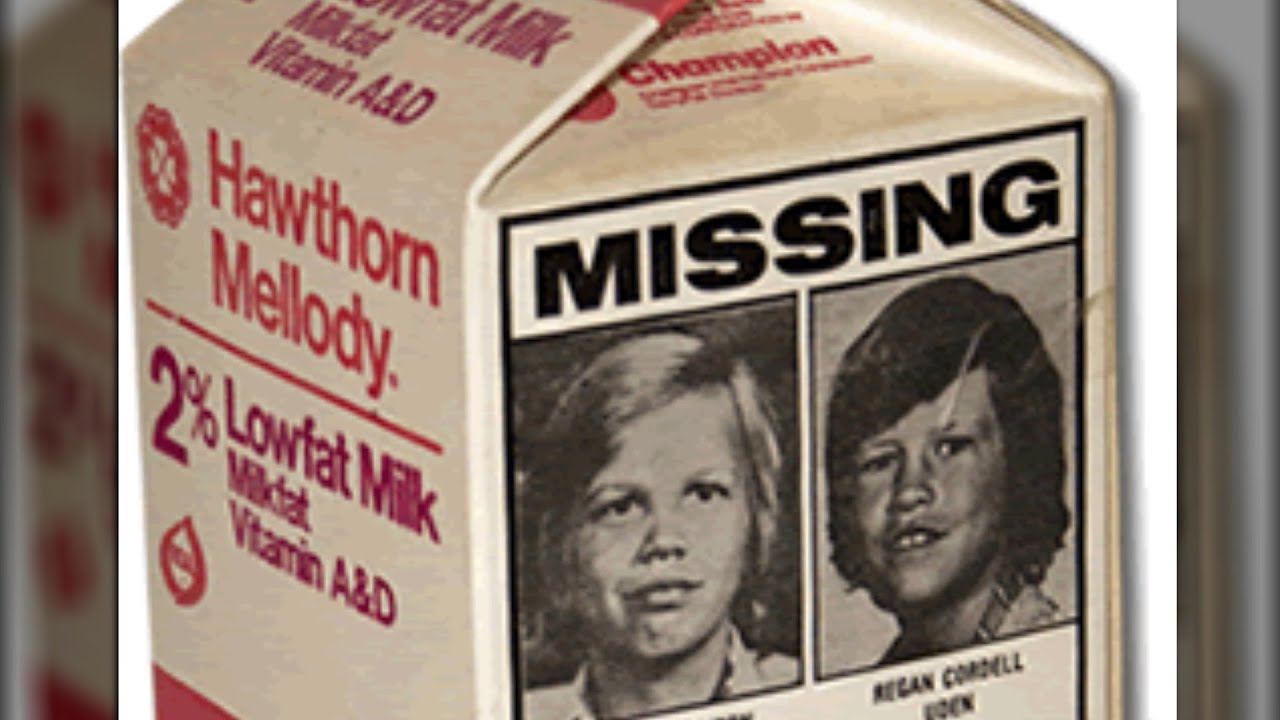
Do you remember the Missing Children Milk Cartons?

Beginning in 1984, photographs and biographies were placed on millions of milk carton side panels, bringing the faces of abducted [missing] children...directly to countless Americans and individuals worldwide. [Source]
The cartons were an early means of raising awareness. But efforts far surpassed breakfast table speculation with the 1982 advent of entering details of missing children into the FBI's National Crime Information Center database. Today, children's cases are usually registered with the National Center for Missing and Exploited Children (NCMEC), and the CUE Center for Missing Persons, a powerful North Carolina-based search, family support and advocacy organization, which also works on missing adults. Missing Adults are routinely registered with NamUs, the National Missing and Unidentified Persons System, which is a national centralized depository and resource center administered by the U.S. Department of Justice.


Every person is someone's child.

This is a guiding principle of the CUE Center for Missing Persons. Out of the blue, a family can go from laughing at a backyard barbecue and shopping for school clothes to living the nightmare of a missing child. It is impossible to go-it-alone. Though there are no guarantees, founder, Monica Caison and her tremendous corps of volunteers embrace the nightmare with competence, and an Oath:


 “I offer myself to those who have nowhere else to turn. These desperate people who ask for my help have unique situations. Yet, however unique, they are bound together with the commonality of being the loved one of a missing person.”

Publicity for an alert is essential. 

CUE facilitates the prompt dissemination of missing persons flyers, news bulletins, web pages and social media postings. "Our goal is for people to visit our site often and study not only the missing person posting for someone they know, but the postings for many other individuals who are in need of support. Missing persons postings are updated constantly. We get a lot of tips," notes Toni Thomas, CUE's National Research Team Manager and a NC State Director.She continues:
“we are hoping that everyone will re-post on their social media accounts until the awareness is global instead of local.” The acronym 'CUE' stands for Community United Effort --urging others to care, speak up and sometimes-- lace up!  

Ground searches are vital.

[Source]

Searching is done by volunteers, and first experiences can be frightening. I spoke with one volunteer searcher who wished not to be named.

“When three boys from our town went missing, I was shocked. ‘’That could have been my kids,’ I thought, and volunteered my family for a search drive. We were given some instructions and, as we walked neighborhoods, we handed out flyers, took notes and pictures. Was I scared? Oh yes! This was my first experience; when I stepped out of the car and started down an embankment, I thought, 'If I find them, I'm gonna freak out.' I kept thinking, 'I don't want to be the one to find them!'

Most missing persons organizations discourage (or prohibit) family members to participate in searches. Why compound a trauma? Caring but neutral and level-headed volunteers can effectively comb great distances and difficult terrain...and effectively manage discoveries.

Michael Jastremski
I was told that psychics “come out of the woodwork’ in response to alerts for missing persons. Some are hoping for publicity, while others make a real contribution in the hunt for clues, and give lots of reliable tips on things searchers should look for: red barn, white fence, a stream, etc.

How does the family of a missing child feel?
Team Hope, affiliated with the National Center for Missing and Exploited Children (NCMEC)
describes itself as “a group of ordinary people who one day were forced to live every parent’s nightmare.” They are passionate about providing peer support through a dedicated hotline 1-866-305-HOPE (4673).  “We live with a deep, deep sorrow that threatens to overtake us at times.” [Source]   The Condolence Coach urges readers to spend a few moments with A letter from a Team HOPE volunteer.

What can I say to a family with a missing child?
"It would never be appropriate to tell a grieving family that discovery is a relief," Toni Thomas of CUE shared, "but in time, the family may express that, themselves."  She offers this advice to neighbors, friends, co-workers:

  • All you can really do is be there for the family. Lend moral support. Be there as a shoulder to cry on.
  • When the phone rings in the middle of the night and a parent is distressed, just listen.
  • Take a dish-- all physical help--especially search related, is of the utmost importance.
  • Don't say "I know... it's hard..." unless you have been through this experience. Nothing compares.
  • When (if) there is a funeral, go. You may hate funerals, but this is not the time to be self-centered. Step up and support that family.

Michael Jastremski
Follow the family's lead.
I asked Toni about my Condolence Coach rule of remembering the missing child, sharing stories, and keeping their name and memory in mind. She counseled, "some people are deeply appreciative of reminders, while other families find some peace by letting the missing (or deceased) person rest. You must respect that. This is unlike any other loss. I'm not suggesting that you avoid the family, just accept their way and carry on."

Afterword:  Of all the things we may leisurely browse, read, and laugh at on the internet, consider taking a few moments to visit missing persons postings on Facebook, various websites, or CUE's Missing Persons pages. You could have an important piece of information which can usually be submitted confidentially.

USAF Captain Douglas Ferguson
The Condolence Coach first explored the topic of a missing person in Missing In Action! A Soldier's Sister Keeps Vigil. 44 years after her brother was shot down over Laos, during the Vietnam War, Sue Scott said her goodbye. This is her story of those long years, waiting.

Share this post with your favorite social media:  it matters!  Thank you for caring.

Tuesday, July 8, 2014

Angels Above Baby Gowns: Soothing A Terrible Loss

November 2017 UPDATE:  In the words of founder, Dawn, "Angels Above Baby Gowns is still going strong. We are now in over 350 hospitals and in 5 countries. We grow bigger everyday."

IT IS A BUSY THURSDAY MORNING as I pull to the curb of Dawn's home. Garbage trucks rumble nearby, and Blue, her adoring companion, eagerly waits for me to enter the yard's gate. I am here to meet the Michigan founder of

ANGELS ABOVE BABY GOWNS


"It's not about us, it's about helping families."
A gentle hug 'hello' continues the relationship we began on the phone. Face to face, the glow of peace and wholeness from Dawn Lafferty is remarkable. 


You would never guess that only a few years ago, she emerged from an abusive marriage, betrayal, fraud, and multiple fragile health concerns and yet:  she glows.

Propelled by a driving energy that belies her disabilities, Dawn proudly navigates the busy sewing quarters of her basement, plucking up and distributing supplies to volunteers.
 "I'm not lonely now...I've never felt younger!"
THE STORY BEGINS less than two months ago, when Dawn read an article about a woman who created burial gowns for babies who never left the hospital. 
Grieving parents sought a dignified farewell for their precious child, born premature. Ready-made clothing for such tiny babies is nearly impossible to find, but a trip to heaven requires more than a diaper!

The compelling need touched Dawn deeply. Not finding a Michigan organization to assist, she launched ANGELS ABOVE BABY GOWNS.

Dawn retired early, for medical reasons. Leaving a corporate career, she had more time for her love of sewing.  "I started sewing when I was 10--taught by my Mom. She made all the clothes for the seven of us."

Dawn is the volunteer Costume Organizer for the Grosse Pointe Theater;  She creates hundreds of costumes for several plays each year. This Spring, the production of Les Miserables required over 300 costumes to be designed, sewn and fitted for each actor!  And when the theater is dark, Dawn's sewing room is not: "I sew every day-- alterations for family and members of the community senior center."

When parked at a sewing machine, Dawn straight-stitches gown seams with expert swiftness, but tender care. She stands up at a serger overlocking machine to finish seam allowances:  no frayed edges for her Angels!

Volunteer, Wuneetha, mother of two and Coney Island waitress, is here because "my nephew, Matthew, was an angel baby." She describes the grief of her sister, D'aun, who puts balloons on her son's grave, each month. "A child is growing inside you; you've given your heart. Their death is devastating." 

Before beginning my assignment of packaging gowns for delivery to hospitals and hospices,
Karen Herzog arrives to donate her wedding gown.


Transforming a gown is exciting
Lace and beading are harvested

Patterns are applied and cut from the silk and satin

"Let the little children come to me"  Matthew 19:14


Exquisite details create a precious gown for baby
Varying in sizes, each is unique

What do grieving parents find helpful or hurtful?

Wendy has experienced several miscarriages and a newborn's death. A board member of Friends Supporting Parents, she shares:  
"Our hearts broke the moment hers stopped, and to this day, remain broken. People feel uncomfortable with death, and even more so with a child/infant death.

After a while, we begin to feel alone."

 She encourages grieving parents to find peer support. Wendy has been attending Friends Supporting Parents since 2010 and describes the comfort: "we are surrounded by people who know and who care because they've been there too. We continue to come because we can be authentic about our grief. And, everyone gets it."

The Condolence Coach says:
  • Let's understand that a miscarriage IS a baby lost. Your note to the parents can acknowledge that. This is the time to step up with assistance because a physical trauma to the mother, has also occurred: 
    • I can see [or hear] how devastated you are; take good care of yourself.
    • How can I help you at this time? Would you like me to____?  It is best to go ahead and make practical offers such as helping with other children, grocery shopping, meal preparation, even cleaning or gardening.
  • Don't pry, but be a good listener: This is so sad. Would you like to tell me about the baby [or name]?
  • Do not interject assumptions or advice other than: 
    •  I know how excited you were to bring the baby [or name] home. 
    • This is hard for your whole family.
    • You've been through so much. Take care of yourself.
    • Maybe the hospital gave you a referral, but I've read about a local support group; would you like their information?
Contact or Follow Angels Above Baby Gowns on Facebook

More Resources from The Condolence Coach:
I was inspired to write about Angels Above Baby Gowns by a woman who lost two grandchildren by miscarriage. Now, I know more about her loss: When Grandparents Grieve

Read more heartwarming and heartwrenching stories of Angels Above Baby Gowns:
 Someday I'll Meet My Brothers,  Delivery At a Birthing Center,   A Time to Tear and A Time to Mend,  and Heartbeats and Lightening Bolts

Readers may also wish to visit this post about baby and children's death:  Two Too Many: Gone But Never Forgotten
When siblings experience the death of a baby brother or sister, these posts may provide good condolence guidance:  Grieving Children, Part 1,  and  Grieving Children, Part 2.
This post is a good review of responding to any child's death: 5 Things to Say When Death Strikes the Young

Grieving parents may find comfort in this peer blog:  Wanted Chosen Planned 

Your friends will thank you for Sharing this post.  I thank you for caring!