Showing posts with label funeral home. Show all posts

Friday, May 22, 2020

The Covid-19 Condolence Note

Begin at the beginning


Every death and every grief is a tough ration of reality. Normalcy is suspended. Extra duties pile on and most have unique challenges; still, survivors move forward. They find comfort and support in the strata of life relationships and, with time and revision, 'normal' bears resemblance to the well known.

If there is one topic all of humanity agrees on, it is that the Covid-19 pandemic has assaulted the concept of 'normal.' All patterns-- how we tend the sick, vigil the dying, gather to mourn and weave our memories into shared legacy--are torn. We are left to begin at the beginning. 
Celebrating a person's life should never be about the cause of their death.
You may feel the pandemic has taken much from you--casual freedoms, livelihood, leisure enjoyments; DO NOT let it take your memories of this wonderful person!

Beyond the Top 5 Keys for a Great Condolence Note


Now, more than ever, you need to step up with written condolence. Final embraces, funeral hugs and food-filled wakes have been put on hold (many irretrievable!) Since you may not be able to reach out with arms, reach out with words! Giving survivors something to hold and spend time with not only fills in gaps, but provides a lifeline of hope.

Years ago, I designed a bookmark to promote my eBook, but I wanted it to be useful beyond marking your place. I reviewed my writings and distilled the reams of Condolence Coaching to this:
Notice the suggestion that you only need 2 or 3 Keys for your note. Easy, right? It's a good start. And while we absolutely want to deliver good memories, acknowledging the difficult circumstances which likely surrounded loved ones' proximity to the care and death, can be done gently.

Phrasing Special Sympathies for the Hardships of Today


Author image
In addition to selecting one of the Top 5 Keys for your condolence, give your note a sensitivity boost if one of these circumstances occurred:
  • If survivor(s) were not able to to be at the dying person's bedside:
    • "Trust that the love you have long-shared, surrounded ____ when you could not be at his/her bedside."
  • If funeral arrangements were hasty, severely abbreviated, or a gathering was delayed to a future "safer" date:
    • "Although we couldn't gather as hoped, my heart and thoughts were with you."
    • "Although we couldn't gather right away, I look forward to being with you someday soon."
  • Acknowledging the lack of hugs, etc. when they are most acutely needed:
    • "When I heard the news, I just wanted to give you a big hug. Please know that within these words is a "raincheck" for that hug!"
Remember that, if you do not have a mailing address for the family, you can always send your card or note c/o the funeral home or mortuary that handled the final disposition. Just write "Please forward" on the envelope.

Read about Virtual Funerals, here!

Thank you for caring!

Friday, April 17, 2020

Virtual Funerals in the Time of Covid-19

When I worked in funeral service, the biggest tech challenge from day to day was getting a family's photo slideshow to play on our chapel's big screen monitor. Sometimes they hadn't properly closed their program before removing a flash drive, or the photos were stuck in a document folder. Our business maintained national music performance licenses, so we didn't have to worry about all the copyrighted songs families were downloading to their slideshows.
Author image

Years ago, I frowned at a story about a mortuary's drive-by casket viewing feature. Today, funeral home staff are being called to interface with social media in ways that demand new skills and tremendous empathy. I admire their fortitude.

Some of us have already participated in a virtual funeral. While summer "hotspots" raged, a family death out of my home state prevented me from travelling to attend. I was sad to not participate, but shared remembrances with the clergyman, so he could incorporated them into his eulogy. This funeral would not be virtual so, while it took place 2,000 miles away, I watched a photo slide show, read inspirational verses and shared memories with my husband.

I urge readers to explore the following article about virtual funerals because knowing the terrain, can reduce stress if you later find yourself navigating there.

The Condolence Coach asks you to remember these 3 unchanging condolence principles:
  1. Written words of sympathy matter greatly; send a card with a personal note to the family or c/o the funeral home. An emailed condolence is okay, too. Any contact with an isolated mourner is hugely comforting!
  2. Share a favorite and uplifting memory, but if it's your turn to talk during a streaming virtual funeral, be brief.
  3. Express gratitude for the life of the deceased and especially thank the family for hosting the opportunity to "gather."

Tips for your Covid-impacted condolence note

The Virtual Funeral

CNNhealth: Funerals go virtual in the pandemic. Here's how to plan one with meaning and honor the dead

Remember the Caregivers!

Whether you dub them "heroes" is your choice, but remember to:
  • thank caregivers
  • acknowledge their own emotional journey and, 
  • consider inviting them to a virtual funeral or later memorial gathering.
Read more about Condolence to Caregivers

Thank you for caring!

Tuesday, April 4, 2017

Don't Be Shocked: It's Okay to Not Attend the Funeral

There are many reasons that people do not attend a funeral.

Let's run through some reasons, all of which, I have professionally witnessed:
  • Away on vacation
  • About to take vacation, which is nonrefundable
  • Moving (this happened to me!)
  • Bad weather
  • Lack of travel means or funds
  • Poor health
  • Too many deaths in close succession
  • Not speaking to surviving family members
  • Myriad fractured-relationship issues
The Condolence Coach says of any and all reasons:  IT'S OKAY. A funeral should be a magnet for care and respect, NOT an arena to revisit wounds or iron out strife.
Author photo

How do you say "I'm not coming"?

I'd advise diplomacy. You do not need to release a rant, or whine with guilt.

If you have positive feelings but conflicting circumstances: 
  • Express your sincere sadness over the death.
  • Express your regret at being unable to be at the funeral, but suggest a visit at a later date.
  • Under the crush of details and sadness, the responsible person may agree that "later" sounds peaceful. In truth, "later" visits and condolence notes fill a void.
  • In the interim, spend some time reflecting on the deceased:  do you have unique photos, keepsakes, or memories to share?
  • Set a reminder, if necessary, to make that future visit happen.
If you have positive feelings but prohibitive circumstances:
  • Again, your sincere sadness over the death should be expressed, as well as your regret to not attend the funeral.
  • Since "later" may not be an option, you must do more than send flowers or sign your name to a card. While those emotions are peaking, begin jotting down memories, browse through a photo album and pull one or two images. Think about the deceased: what made them unique? Did they have an influence on you? How would you characterize their legacy? Your condolence note may turn into a long-winded letter but it will be special!
  • If you are physically unable to write, dictate to someone who can, or consider a recording. Yes, a phone call is an option but as my readers know, it lacks a permanence only possible with hold-in-your-hand notes and pictures.
If you have negative feelings: 
  • You--and they--don't belong at the funeral. It doesn't matter if your distaste is for the deceased or survivors--please stay away.
  • I am not judging your feelings; no doubt you have suffered angst and/or anger. The fractured relationship is probably not a secret, and I can assure you that the deceased's family may have had a whispered, anxious conversation about whether you would show up.
  • It happens: funeral home staff are asked to watch for, and bar, an unwanted visitor; sometimes an arrangement is made for a private viewing by the "difficult" family member, while family leaves for dinner.
  • Please remember that a funeral (we're using that term to cover all associated pre-and-post gatherings) is a tradition designed to render comfort. Accept your limitation in this regard.
Author photo

Beyond negative feelings: 

Now that you've read the 'DON'TS' surrounding negative feelings and funerals, here is the 'DO': 
  • Listen to your heart. If you notice a caring thought or endearing memory pushing through your negative feelings, jot it down. When you feel able, visit that thought or memory again and go a little deeper. jot down a little more. 
  • Maybe you have a snapshot somewhere, showing a good time once shared; put it with your notes.
  • It's not time--it may never be time, for you to write a condolence note to someone else, but as an act of compassion to yourself, you could be the recipient of the condolence.
  • You can also write a note to the deceased! I explain the why and how in my post, Dear Frank, I'm Sorry You Died: Writing to the deceased, . This may be an excellent tool for you to express your feelings, the highs and lows. This is not a letter that will ever be read, but it can provide important catharsis.

Boundaries and Freedom

American psychologist and co-founder of the Humanistic Psychology movement, Dr. Clark Moustakas, noted that we gain freedom through exercising boundaries. He pioneered self-acceptance over self-condemnation, and wrote: 
"Accept everything about yourself--and I mean everything. You are you and that is the beginning and the end. No apologies and no regrets."
Thank you for caring!

Tuesday, June 3, 2014

Laughing Condolence: When Life Overflows, Share A Story


I've told readers before about my delight in accidently pouring a beverage to overflowing. Watching the liquid cascade over the brim is very therapeutic.

I am reminded that, at times, life overflows. 

Author image
I suppose I'd save a few paper towels by observing a fountain--especially one with a satisfying spill. 
At the funeral home, my heart is warmed to see a circle of chairs drawn together, and stories being shared. Laughter spills from the room and it is good. It might be the younger generation swapping stories about Grandpa's girlie poster in the garage. It might be the adult children remembering Dad's standard reaction every time they had to tell him something was broken.

This is a gathering of “The Walking Wounded”

When you are one of the walking wounded, coping with the death of a person you've loved and enjoyed, hurts. Telling (and listening to) stories is a balm. 


Many years ago, I had a wonderful friendship with a gentleman I met at church. We got in the habit of having breakfast after the service; I'd show him how to peel a grapefruit, and he'd promise perfect toast from homemade bread. Leo smoothly maneuvered his scooter over to the counter, ready for the slices to pop up. A fifty year age difference made no difference. 

Author image
The most remarkable thing about our friendship was its focus on the moment. We didn't exchange much personal history, preferring the vitality of the present:  days of fun--or funny incidents--were dubbed 'Holy Days.' We'd muse on a line from a hymn, or scripture, or a joke: 'Said the ink spot to the paper:  my dad is in the pen awaiting sentence.' From time to time we’d exchange letters by mail. It was an uncomplicated but precious camaradie.  

When Leo suddenly lapsed into a coma, his family graciously invited me to sit with him during what became his final hours. When he died, my first anguished thought was, “Who will love me like Leo?” At the vigil gathering, I was reminded that his death had left a gap for many.  That evening, laughter softened the hurt, as stories and memories were shared. 

A few days later, I wrote a condolence note to one of his adult sons, knowing it would be my expression to the entire family. The notecard I selected depicted a young child sitting amidst the lion and the lamb, an image of the peaceable kingdom described in the Bible’s Book of Isaiah. To me, Leo was the “peaceable kingdom,” and he made me feel like one of its princesses. Because my life had overflowed with something wonderful, I shared a funny breakfast story. It was a Laughing Condolence.

The Condolence Coach recognizes that, for some cultures, the room should be quiet.

I have served vigil gatherings where a large circle of chairs is utilized, but the silence is broken only by murmurs and possibly, low tones of 'angelic' music playing on the sound system. A quiet vigil provides a different type of support and contemplation of the deceased's life. This does not preclude a later condolence note containing a funny story. If you had a special relationship, your good judgement will guide you.

Thank you for caring and sharing!


Saturday, April 19, 2014

Don't Rush Your Condolence Note

You're ready to hop in the car and go the wake or service but-- darn-- you haven't bought a card.

RELAX. DON'T RUSH YOUR CONDOLENCE NOTE.


[Source)
It is not necessary that you walk in with a card. I would even like to suggest that putting a little time between the funeral and writing your note can be very helpful for you-- and your grieving friend who is, at the moment, overwhelmed with details and caring people.

Tuesday, April 15, 2014

The Bones of Indifference: Neighbors Found Dead

Dateline:  Chattanooga TN  Skeletal remains of brothers found at home in their side by side recliners.


Andrew and Anthony Johnson were 63 year old twins, quietly sharing a home, maintaining the lawn and doing some gardening. They grocery shopped together and lived the bachelor life, with blinds drawn and a shyness that may have been partially due to one brother's deafness.

A relative had asked local police to swing by and see if the brothers were okay. After forcing entry on March 29th, officers found them so deteriorated as to likely have been dead since 2011.
[Source]

How could this happen?

Friday, February 21, 2014

Grief and Health: The Healing Powers of Condolence

Grieving puts people under tremendous stress. 

Initially-- after the death of a loved one, there are so many things to do: 
  • funeral planning and the functions surrounding one
  • non-stop phone calls, made and taken
  • packing and vacating a care facility where the deceased spent their final weeks
  • writing checks... and then writing more checks
  • and many, many more tasks

Acknowledge this in your note, and step up with help, if possible.

Grieving is exhausting.

"When this is over, I am going to collapse somewhere." 

If I had a dime for every time this was said... There is a remarkable parallel between the vigilance of family surrounding a dying person, and the attention paid to an orderly and respectful disposition of the loved one's body and worldly possessions.
  • at the mercy of life forces and their mystery, there is no rushing--even advance directives follow a process
  • if bedside shifts are assigned, there is usually one person serving as advocate and guardian
  • being lovingly in charge requires a person to stand on slippery rocks against the unceasing waves of situation

 Again, acknowledge this in your note. 

Yes, condolence has healing powers.

  • There is scientific proof that feeling sincerely cared for, has an immediate impact on our health.  Blood pressure and heart rate lower, calming hormones are released.
  • Writing a condolence note is an act of compassion, and its healing powers touch the writer, too! 
  • A well-written, hold-it-in-your-hand condolence note will be read many times, and with each reading, a healing moment is experienced!
Thank you for caring.


Sunday, February 2, 2014

Sweet Sympathy: Care By Baking

"There is nothing sweeter than to be sympathized with," writes George Santayana in his 1905 book, The Life of Reason.  My mother, Elizabeth, deepens the interpretation, as she routinely bakes a homemade snack for the bereaved family. Baking-- call it art, craft, hobby, homemaking, or passion-- is something I grew up doing...

It's morning, I'm in my bathrobe, and I'm using the mixer. Mom's at the stove, "Hurry up with that batter, Deb!"

Home from college on a snowy afternoon, I'm drooling onto my sister's bandana as she stirs. "Hurry up with that batter, Lynn!"

Beside the fact that a bereaved family is swamped with things to do (and cooking is not one of them,) a gift of homemade food lifts a burden, comforts and, with that first delicious taste, brings a smile.

My mother's criteria for a choice of food is no-nonsense:  "This is an easily-transported cookie/bar; and neat to eat as the glaze, a tart contrast to the cookie/bar, hardens when cool."  As I am the funeral home staff member who chases the crumbs and the gooey stuff jammed into the caulk lines of the lounge tile, I like Mom's criteria!


Take-Along Cookies
1 cup butter or margarine
2/3 cup firmly packed brown sugar
1 egg
1/4 cup water
2 cups sifted flour
1/2 tsp baking powder
1 tsp salt
1 cup quick or old fashioned oats
1/2 cup mini chocolate chips
1/2 cup currants
1 cup powdered confectioner's sugar
1/2 tsp grated lemon peel
2 T lemon juice
2 T finely-chopped walnuts
Beat together butter & brown sugar. Blend in egg and water. Mix flour, baking powder and salt; add gradually to creamed mixture, stirring til well blended. Stir in oats, mini chocolate chips, and currants. Spread batter evenly in greased 15x10 jelly roll pan. Bake 350 about 35 minutes. Combine confectioner's sugar with lemon peel and lemon juice. Spread over hot cookie dough. Sprinkle chopped walnuts over glaze. Cool and cut. Yield: 24-26 cookie/bars

Friday, December 27, 2013

Facebook Condolence Notes

IS IT OKAY TO SEND CONDOLENCES ON FACEBOOK? 


That question arose in a recent Ask Amy advice column, by a woman grieving the death of her father.

Explaining that she used both personal and electronic forms of communication to notify friends and co-workers of her dad's passing, she was fairly appalled to receive e-sympathy. And I nodded my head as I read her longing for "something I could hold, display and perhaps save."

Facebook fills many social networking needs, and memorial pages/death notices are being posted all the time. With growing frequency, families decline my offer to place an obituary (notice) in the newspaper, saying: "we'll let our friends know about the funeral with Facebook." An electronic culture of communication is a two-way street, though.

I appreciate how many people walk in the door of the funeral home with an envelope in hand and clearly, the recipients of those sympathy cards do, too.


  • Please try to follow-up your Facebook comment with a real condolence note. 
  • If you do not have the home address of your Facebook "friend," it is always acceptable to mail a card to the funeral home that handled the arrangements. We are happy to securely forward mail.


Saturday, December 21, 2013

As Heard in "the Home"

I AM NOT MAKING THIS STUFF UP.  Jewel came in to purchase memorial jewelry. Her husband had died almost three years prior, but we still stored a portion of his cremation ashes. When she had extra cash, Jewel bought another keepsake; soon, she would have given one to each of their five children.
Casey, a Gulf War wounded warrior, had endured a lengthy illness after deployment. Life was pretty miserable except for the care and loving indulgence of his devoted childhood sweetheart. Jewel shared some of the "sympathetic" remarks she has and still receives...

"You really killed Casey with kindness--giving him treats he wasn't supposed to have."

"You'd better start dating soon-- try match.com -- 'cause once the kids are all grown, the survivor benefits are going to stop, and you'll be too old to marry again."

"Why did you and Casey have such a large family on Army pay?"

"Those cremation necklaces are pretty but how're you going to pay for college?"

[Source]
Dear readers, I could only shake my head and give Jewel a hug. And I will spare you a ranting dissection of these heartless comments. DON'T LAY AN EGG:  please do not give advice to the bereaved.

Tuesday, November 19, 2013

IOU for a Hug

I SEE A LOT OF HUGS from day to day at the funeral home. Social barriers seem to dissolve in the face of grief.  Buddies, neighbors, co-workers lean in for a quick clasp or pat, expressing what words can’t:  I’m sorry for your loss! In Martha Stewart-ese, “It’s a good thing!”

But awhile back I read a blog that made me ponder my own hug health. I’m so vigilant about daily intake of green leafy veggies, protein, and vitamin D, yet I discovered a deficiency in my Hug Life! Even my doxies, Joey and Chloe, had the good thing going on. I spoke to my husband about it and he promised to help me better achieve my RDA (recommended daily allowance.)


ChiLiving co-creator and blogger, Kathryn Dreyer, moved me deeply in her post,  How To Give A Hug. She wrote:
"this is not about a polite, social hug. This is about giving a hug that sends a clear message of caring." 
You know the difference; you know that feeling of essential life energy (chi) when two people connect with a true hug. It is a very special experience. This is the nature of a "true" condolence, too.

So, how can you put a true hug into your condolence note? Figuratively, writing your note with a few Keys To Comfort (see my previous post) will share your "chi" of caring.
If you are unable to visit the bereaved person during the services, your "Literal" option is to enclose an IOU For A Hug.  Go ahead, cut out a magazine photo, a square of bright paper, or an old sweet photo and, with a Sharpie or highlighter write:  IOU for a HUG!

CARING:  It really is the essential secret strategy to writing a memorable condolence note.


Monday, July 29, 2013

Sunrise To Sunset

Everyone understands the beauty of a sunrise and a sunset. Consciously viewing them is a special experience, elevating the Day/Night rhythm to profound poetry.

In recent months at the funeral home, we have been using those terms in memorial printed material.

SUNRISE-- the beginning of life.
SUNSET-- the conclusion of life.

Grieving families respond well to the balm in those terms. 

Sunrise gentles the pain and chaos of birth--and certainly leads away from the database that so much of life pivots on (date of birth.)

Sunset, again, gentles the pain and chaos of death--and leads us away from tubes and beeping monitor and silence (date of death.)

The length and scope of the deceased's life shimmers between those shores; the crossing from east to west becomes a journey to reflect upon and celebrate.

Consider using this concept as a frame for your condolence note. It will be memorable.


Wednesday, June 19, 2013

Yes, it's okay to be happy

YES, IT'S OKAY TO BE HAPPY when you are with grieving people. When I stand at the door of the funeral home, greeting people:  directing them to the left or right, or just nodding as they zero in on the restrooms sign, basic courtesies take place.

"Hello, how are you?"
"Fine. How are you?"
"Really well, thank you." Oops?

Hold on... If your life is as sweet as the buttercream and message on this cake (now a lovely memory) that's good, and you can say so.
But your acknowledgement of their opposite state-- a spoken (and written) observation, is comforting.  "This must be a very difficult time for you. I'm so sorry." 

Perhaps you can remember a time when you felt so overwhelmed by a painful situation that returning to "fine" seemed unlikely. At some point, you became "fine" again.  Keep this clear-headed insight to yourself. 

Your condolence note provides the opportunity to offer some help, however.
  • "I'm good with paperwork, if you need a second pair of eyes."
  • "If you need help with yard work at your Dad's place, here's my cell..."
In life, we take turns being happy--or struggling... which is why reminding a grieving person that they are not alone, is valuable.


Sunday, July 25, 2010

Sharing History: Hero or Villian?

Today, my husband and I visited the Detroit Historical Museum; we really enjoyed wandering through the three floors of exhibits. I was pleased to see that both young children and adults were engaged.

One exhibit in particular, called:  HEROES OR VILLAINS? presented biographical information and artifacts on 16 prominent individuals of the metropolitan Detroit area.

In a remarkably unbiased way, each man and woman was described on display panels. Nearby, were a few panels with quotations by their contemporaries;  these panels--though black and white--were flaming with accusatory and angry sentiment!  Heroes or villains?

Such contradictions are not restricted to public personalities; we each live in shadows and sunshine. 

And at funerals, conversation can drift in either direction. Is it acceptable to "speak ill of the dead"?  That is for you to answer.

The Coach says:  never discuss a person's 'shadows' in a condolence note.

You may have memories of the deceased from work or leisure that offer a unique perspective. Sharing history (memories) is one of my favorite Keys For Comfort. It does come with an unbreakable rule: never shock, humiliate or belittle the person who died.  Be your own censor, bite your tongue (or pen,) dig deep if you have to, but be kind as you share history. Your condolence note should resonate with words so precious that they will be re-read!

Hero or villain? The answer does not belong in a memorable condolence note.

Share this thought with a friend. And thanks for caring.

Saturday, July 10, 2010

Need A Hug?

Matt Artz, unsplash.com

A point that comes up several times in my book, is that we are powerless to fix grief. It can be hard to watch the suffering; there are no magic phrases to be offered. But I can assure you that, over and over, I have been told--and I have observed in my work at the funeral home,that offering a hug and offering to listen are deeply appreciated!

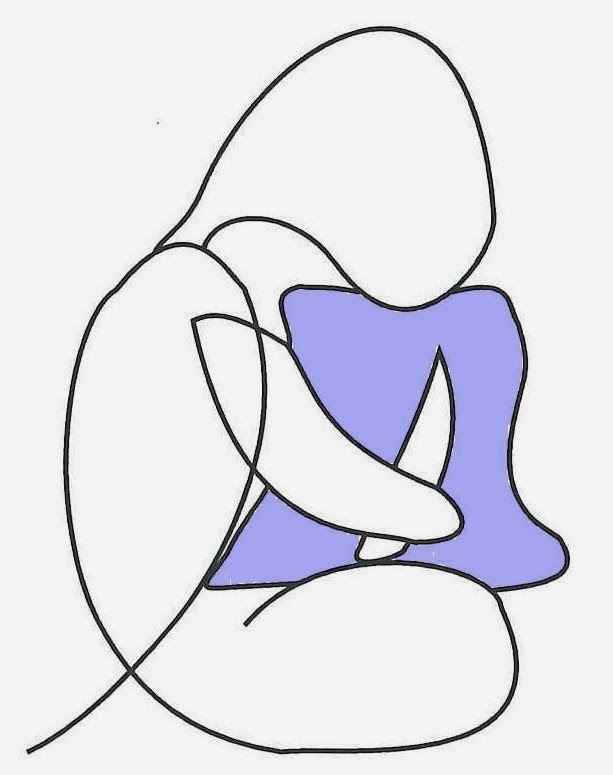
When I began planning the concept and content of Words for when there are No Words, Writing A Memorable Condolence Note, I remembered a simple ink drawing that I had made during my college years. The original art is in a 4 x 6 inch sketch book.
Author's sketch

The androgynous character sits hugging a pillow; I like the simplicity and flowing lines. It's an effective logo because it delivers the message:  Care enough to comfort and, A condolence note can be like a hug.

What do you think?

Wednesday, March 10, 2010

Beyond "I'm Sorry"

I'D BE OUT OF A JOB if caring people--like you--didn't go to funeral home visitations. Maybe you walk in, put a package of cookies by the coffee maker in the lounge, sign the register book, shake hands, hug a person or two, wander by the collage of family photos, pick up a memorial folder...and then leave.

It meant a lot that you came. You can't change the circumstances facing your friend, co-worker, neighbor, cousin or client...but there is an additional way to communicate sympathy long after the loss:  a memorable condolence note.

Author image
Think about this:  have you ever saved a card or letter? What qualities made you value it, re-read it, treasure it, and even thank the sender?

Today, as this light of awareness brightens, you are beginning to understand what makes a note "memorable."